
What To Know About Artificial Grass in Arizona’s Monsoon Season
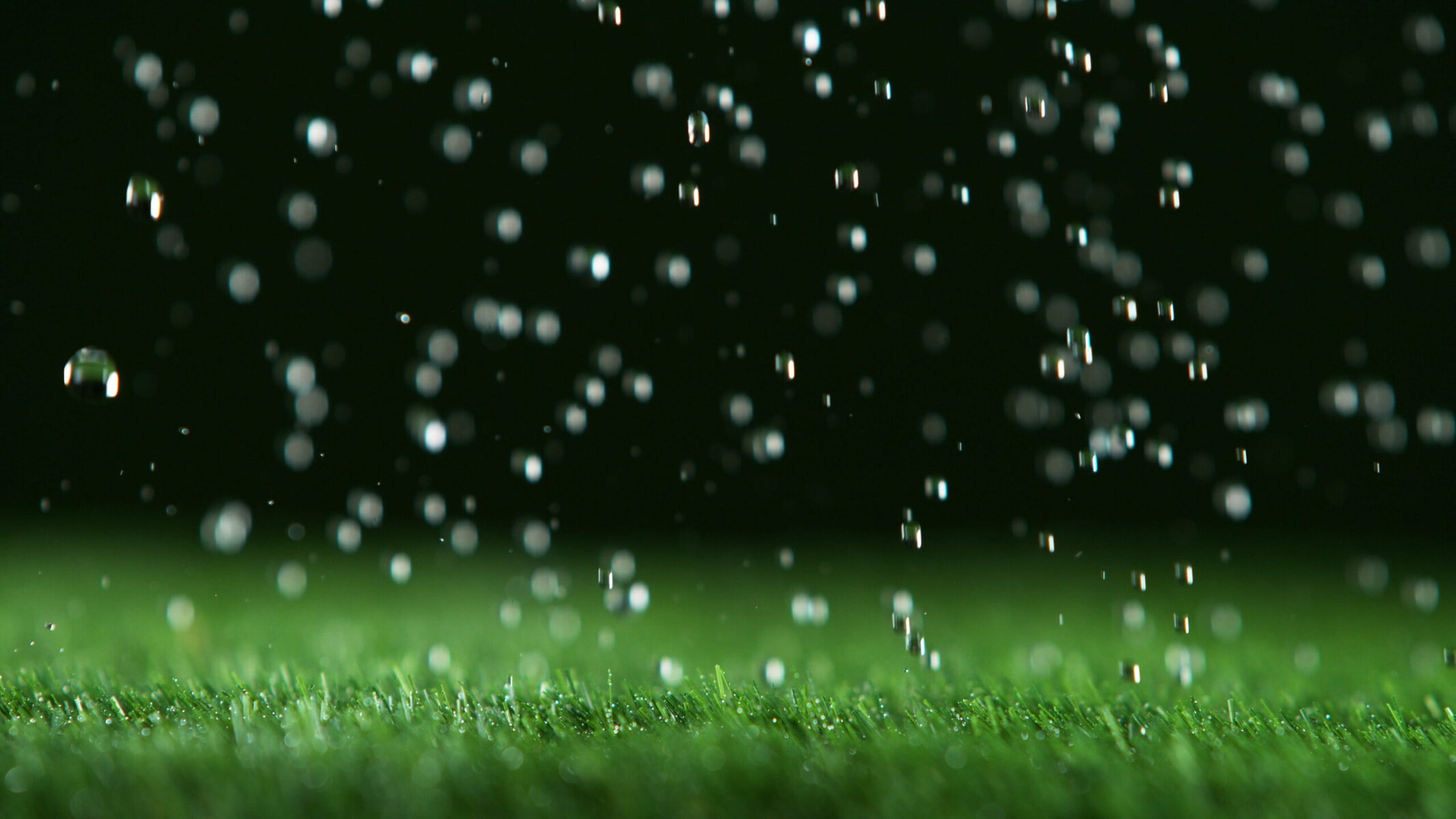
Monsoon season is the hardest test an Arizona yard faces all year. From mid-June through September, storms can drop an inch of rain in under an hour, and natural grass doesn’t handle it well, turning to mud in the low spots, staying soggy for days afterward, and washing out wherever the grade sends water. Most homeowners spend the rest of the summer reseeding patches and waiting for the yard to dry out enough to use.
Artificial grass changes that experience completely. A properly installed synthetic turf lawn drains a monsoon downpour straight through the surface and is ready to walk on almost as soon as the rain stops. Here’s how that works, what quality installation looks like, and why so many Arizona homeowners decide to make the switch right after a big storm.
How Does Artificial Grass Handle Heavy Rain?
High-quality synthetic turf is manufactured with a permeable backing that flushes water through at rates exceeding 30 inches per hour per square yard rather than pooling on the surface. Underneath it sits several inches of compacted decomposed granite that water also keeps moving through. Rain goes down and away from your property instead of collecting on top of your lawn, which is why a well-built synthetic grass landscape drains considerably faster than natural grass does.
What that means day-to-day is a yard you can actually use year-round. There’s no mud getting tracked across the patio and into the house, no muddy paw prints after your dog goes out, no standing water breeding mosquitoes near the play set, and no bare patches to reseed once the storms pass. The lawn looks exactly the same the morning after a storm as it did the day before.
Why Monsoon Season Sells So Many Homeowners on Synthetic Turf
The stretch from June through September is when the gap between natural grass and synthetic turf is most obvious, and it’s when we hear from a lot of local homeowners who have finally had enough.
- Your yard stays usable. Kids and dogs can go back outside as soon as the rain stops, with no waiting for the ground to firm up and mud to dry.
- No storm recovery work. There’s no reseeding, no filling in ruts, and no fighting the fungus and disease that thrive in humid, waterlogged natural lawns.
- It looks the same all season. Your lawn maintains its color through the wettest and hottest months of the year without irrigation, fertilizer, or overseeding.
What Quality Installation Looks Like
A synthetic grass lawn performs well in a storm because of everything that happens before the artificial turf goes down, which is why working with a high-quality synthetic turf installer is critical.
A properly built base
Full removal of the existing sod or gravel, grading for drainage, and several inches of decomposed granite compacted in layers is what keeps the surface stable and free of standing water. Done right, the base doesn’t shift, settle, or hold water after a downpour, and it performs the same way in year 15 as it did in year one.
Secured edges and bonded seams
Artificial turf that’s anchored around its full perimeter with seams properly bonded stays flat and tight through monsoon winds. This is the kind of detail that separates a professional artificial turf installation from a low-quality, rushed job.
Clean borders
Pavers, concrete curbing, or steel edging around the perimeter gives runoff a defined path, protects the turf edge, and delivers the finished look that makes a synthetic lawn read as intentional landscaping rather than a covering.
The right infill depth
Infill weights the synthetic turf down, supports the blades, and helps water move through the system. Correct depth at installation keeps the lawn stable and the fibers standing upright through every season.
Artificial Turf Installation Is a Good Time To Solve Drainage
If your yard collects water near the patio or sends runoff toward the house, a synthetic grass installation is the ideal moment to correct it, because the yard is already open and the grading work is already happening.
Depending on the property, that can mean regrading the lawn area, adding a French drain, setting a channel drain at a hardscape transition, or tying into a dry well. Our team evaluates how your property sheds water during the design consultation, so the drainage plan and the synthetic turf plan get built together, and you come out of the project with a yard that handles monsoon season better than it ever did before.
FAQ: Artificial Grass and Arizona Monsoons
Does artificial grass drain in heavy rain?
Yes. The backing is permeable, and the compacted base beneath it lets water pass through rapidly, so a properly installed artificial grass lawn drains considerably faster than natural grass.
Will my synthetic turf have puddles after a storm?
No. With correct grading and a properly compacted base, water moves down through the synthetic turf and away rather than collecting on the surface.
Can monsoon winds lift artificial grass?
Not when it’s installed correctly. Synthetic turf anchored around the full perimeter and through the field, with properly bonded seams, stays put through Arizona’s storm season.
Is my yard usable right after it rains?
Yes, and that’s one of the biggest advantages homeowners notice. There’s no waiting for the ground to dry and no mud getting tracked inside.
Does artificial grass increase runoff from my property?
No. Water moves down through the synthetic turf into the permeable base below instead of running off the way it does from concrete or pavement.
Can synthetic grass be installed during monsoon season?
Yes. We install year-round across the Phoenix Valley, and most residential projects are completed in just one or two days.
Get Your Yard Ready Before the Next Storm
You don’t have to spend another summer reseeding bare patches and waiting for the mud to dry. Call Arizona Luxury Lawns at 480-991-0196 or contact us online for a free artificial grass design consultation, and we’ll show you what your yard could look like the morning after the next monsoon storm.