
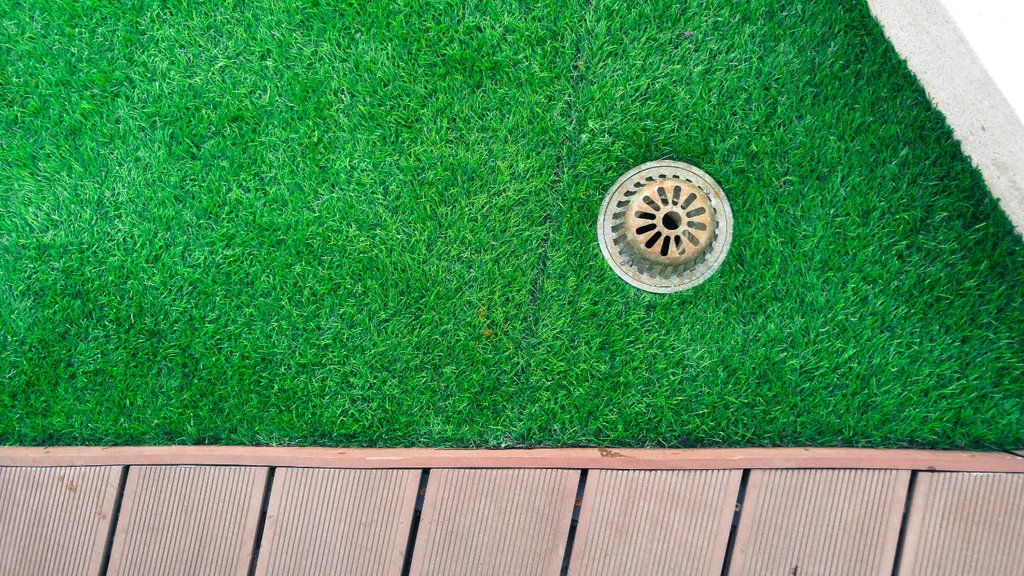
Does artificial grass drain? It’s one of the most common questions homeowners ask before committing to a synthetic turf installation, and it’s a fair one, especially here in Phoenix where monsoon season can drop a couple inches of rain in an hour on ground that’s spent months baking dry. The short answer: yes, quality artificial grass drains well. In many cases it drains better than natural turf.
Artificial Turf Drainage: How It Works
Well-made synthetic turf is manufactured with perforations throughout the backing: small holes spaced every few inches that allow water to pass through and into the sub-base below. The sub-base itself, when properly prepared, consists of compacted decomposed granite or crushed aggregate that channels water away from the surface quickly.
During a typical Arizona monsoon storm, water moves through the turf and into the drainage layer within minutes rather than pooling on the surface. If some temporary puddling does occur during an unusually heavy downpour, it clears fast. And unlike natural grass, there’s no mud, no soil erosion, and no soggy lawn that stays wet for days afterward.
That said, a few things are worth knowing:
- Poor installation kills drainage performance. If a contractor lays turf over an existing surface without properly addressing the sub-base, which is common in rushed or budget installations, you can end up with drainage problems that the turf itself isn’t causing. The turf is only as good as what’s underneath it.
- Arizona’s caliche and clay soil layers can impede drainage if the sub-base isn’t cut deep enough or filled with the right material. An experienced installer accounts for this during site prep.
- Street runoff behavior changes for the better. Natural grass absorbs and holds runoff, including whatever contaminants come with it: fertilizer residue, animal waste, petroleum from pavement. Synthetic turf drains cleanly and can be rinsed down quickly after heavy rain.
What Happens During a Monsoon
Phoenix monsoon season runs roughly June through September and can produce intense, short-duration storms. Synthetic turf handles these well. The surface won’t wash out, the blades won’t flatten permanently, and you won’t be looking at a muddy disaster the next morning. Any debris carried in by wind or water can be rinsed off with a hose or cleared with a stiff brush.
One practical benefit Phoenix homeowners often overlook: after a monsoon rinse, the turf actually looks better. Dust and pollen that accumulate during the dry months wash off, and the blades get a natural reset.
The Broader Case for Artificial Turf in Arizona
Drainage performance is just one piece of the picture. Quality synthetic turf, installed correctly with the right sub-base and infill, also delivers:
- No mud tracked into the house after rain or irrigation
- No watering required, which matters when Phoenix-area water restrictions tighten during drought years
- 20-year lifespan with minimal maintenance: no mowing, fertilizing, or reseeding
- Safe, non-toxic surface for kids and pets year-round
- Consistent appearance through summer heat and winter cool-downs alike
At Arizona Luxury Lawns & Putting Greens, every installation includes thorough sub-base preparation: weed and sod removal, grading for proper slope, and drainage material selected for the specific site conditions. It’s the part of the job that most homeowners never see, but it’s what determines whether your turf drains the way it should for the next two decades.
Have questions about drainage for your specific yard, or want to know what sub-base preparation looks like for your property? Visit our FAQ page or reach out directly for a free consultation.